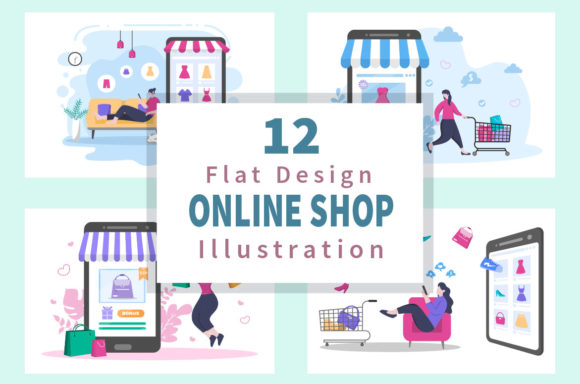
12 Online Shopping Flat Design: A Practical Guide for E-Commerce Success
For anyone looking to build a compelling online shopping experience, 12 Online Shopping Flat Design offers a streamlined and modern approach. These designs are ideal for website landing pages, marketing elements, e-commerce illustrations, web banners, and digital payment templates. With their clean lines, minimalistic aesthetics, and focus on usability, flat design templates have become a go-to choice for businesses aiming to enhance user engagement and conversion rates.
What Is 12 Online Shopping Flat Design?
12 Online Shopping Flat Design refers to a collection of pre-designed layouts that follow the principles of flat design. This style emphasizes simplicity, clarity, and functionality. It avoids complex gradients, shadows, or textures in favor of bold colors, clear typography, and straightforward icons. These features make it easier for users to navigate and interact with an online store, which is essential for boosting sales and customer satisfaction.
These templates are often available in multiple formats, including AI, EPS, PNG, and PSD, making them versatile for different design needs. Whether you're working on a web banner, a digital payment template, or a landing page, 12 Online Shopping Flat Design provides a solid foundation that can be customized to fit your brand’s identity.
Common Mistakes When Using 12 Online Shopping Flat Design
Despite their benefits, 12 Online Shopping Flat Design templates can lead to poor results if not used correctly. One common mistake is choosing a template without considering its compatibility with your brand's visual identity. A flat design that looks great on one site might clash with your existing color scheme or typography, leading to a disjointed user experience.
Another issue is overlooking the importance of scalability. Some flat design templates may look good on desktop but fail to adapt properly to mobile devices. Since a significant portion of online shopping happens on smartphones, ensuring that your design is responsive is crucial.
Additionally, many users neglect to check the file formats provided. If a template only includes PNGs with transparent backgrounds, it might not be suitable for certain design workflows that require layered Photoshop files or vector graphics. Always verify that the template supports the tools you plan to use.
Why These Mistakes Matter
Mistakes like these can affect several aspects of your online store. Poorly chosen designs may reduce usability, leading to higher bounce rates and lower conversion rates. Inefficient use of templates can also increase development time and costs, especially if you need to make extensive customizations after purchase.
Moreover, a lack of attention to detail can result in a less professional appearance, which may harm your brand's credibility. For example, using a flat design template without adjusting the color contrast could make text hard to read, frustrating visitors and driving them away.
How to Avoid Common Pitfalls
To get the most out of 12 Online Shopping Flat Design, start by clearly defining your goals. Are you building a new e-commerce site, updating an existing one, or creating a marketing campaign? Knowing your objectives will help you choose the right template and avoid unnecessary features.
Next, take the time to review the template’s specifications. Check if it includes editable layers, vector files, and high-resolution images. Ensure that the design is compatible with your preferred design software and that it supports responsive layouts for different screen sizes.
Testing the template in real-world scenarios is another important step. Try previewing it on various devices and browsers to see how it performs. This will help you identify any issues before launching your site or campaign.
Best Practices for Using 12 Online Shopping Flat Design
One effective approach is to start with a template that aligns with your brand’s style. Use the flat design as a base and add your own unique elements, such as custom illustrations or branded fonts. This ensures that your site remains visually cohesive while still benefiting from the efficiency of a pre-designed layout.
Another tip is to prioritize user experience. Even with a simple flat design, ensure that navigation is intuitive, call-to-action buttons are prominent, and product images are high quality. These small details can significantly impact how customers perceive your brand and interact with your site.
Finally, don’t hesitate to reach out to the template provider for support. Many designers offer guidance on how to customize their work, and this can save you time and effort in the long run.
What to Check Before Making a Decision
Before purchasing or downloading 12 Online Shopping Flat Design templates, ask yourself a few key questions. Does the template include all the necessary file formats? Is it fully editable? Are there examples of the design in action? These questions can help you avoid templates that are difficult to use or lack essential features.
Also, consider the licensing terms. Some templates may have restrictions on commercial use, so make sure you understand what you’re allowed to do with the design. This is especially important if you plan to use the template for a business or client project.
Conclusion: Make Informed Choices for Better Results
12 Online Shopping Flat Design offers a powerful way to create visually appealing and functional e-commerce experiences. However, success depends on making informed choices and avoiding common mistakes. By understanding your needs, checking template details, and prioritizing usability, you can maximize the value of these designs and achieve better results for your business or project.
Remember, the goal is not just to look good but to perform well. With the right approach, 12 Online Shopping Flat Design can be a valuable asset in your digital toolkit. Enjoy the process, and don’t hesitate to reach out for assistance when needed. Thanks for exploring the possibilities of flat design in e-commerce.